
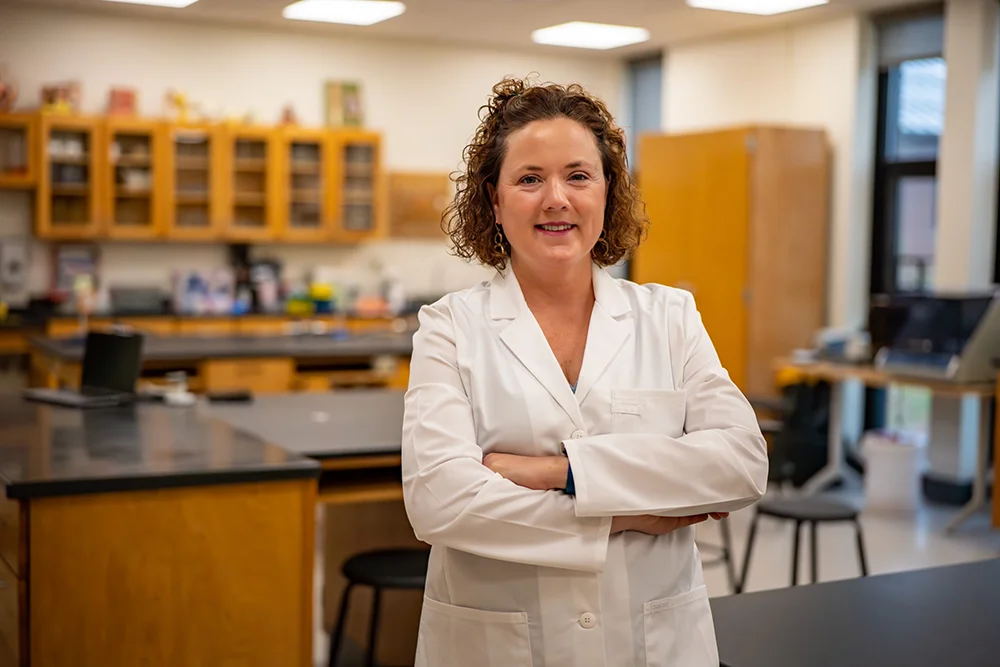
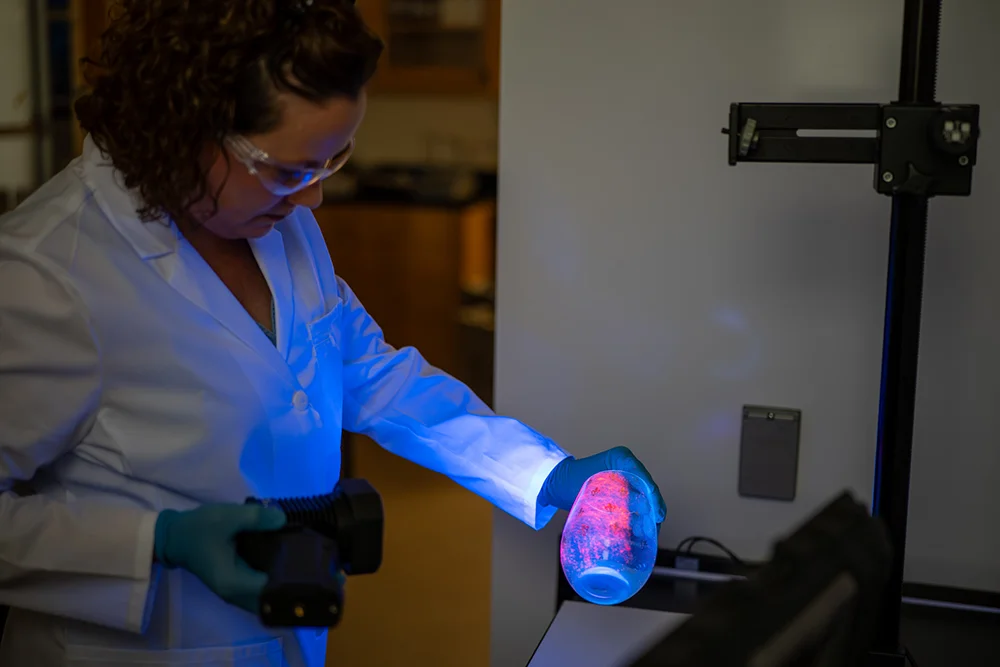
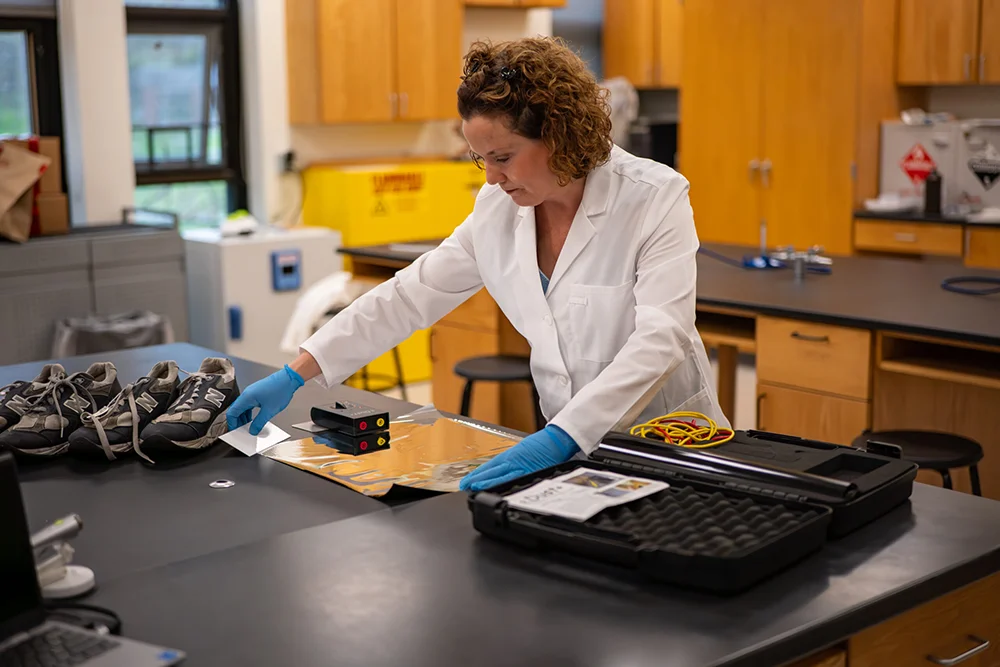
The first rule when taking a class with Dr. Alicia McCarthy: wear comfortable shoes. More than likely, you won’t be sitting in a seat, and you probably won’t even be in the classroom. From learning how to take photos and fingerprints of mock crime scenes, to how to take shoe prints in the snow, Dr. McCarthy’s classes are full of energy.
Dr. McCarthy, Professor of Forensic Science and Criminal Justice, has been teaching for 14 years, six of those here at Thomas College.
“It’s a joy and a privilege to be able to work with young people,” she said. “It reminds you that you’re not young anymore. Just to see them get that spark of excitement when learning something new is so rewarding.”
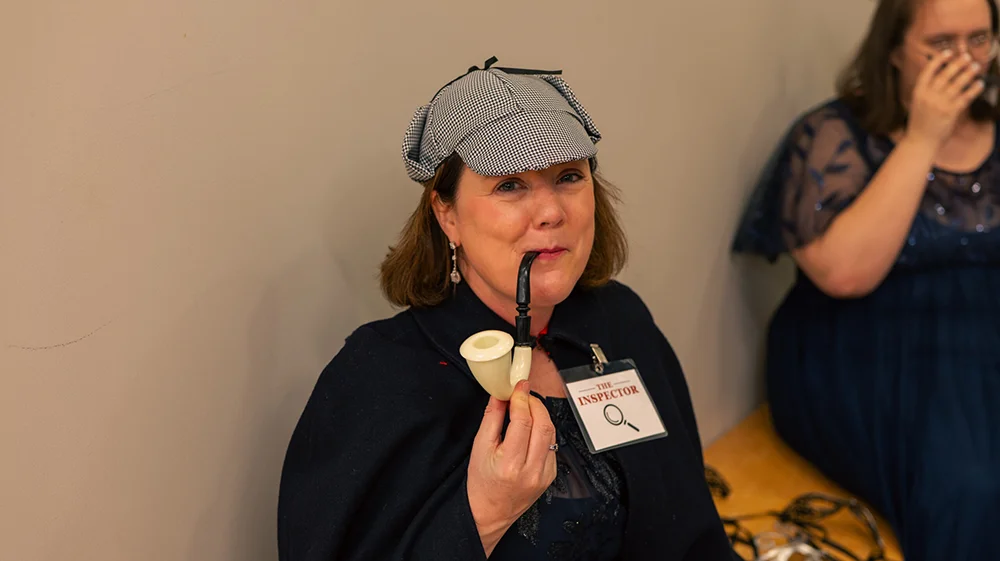
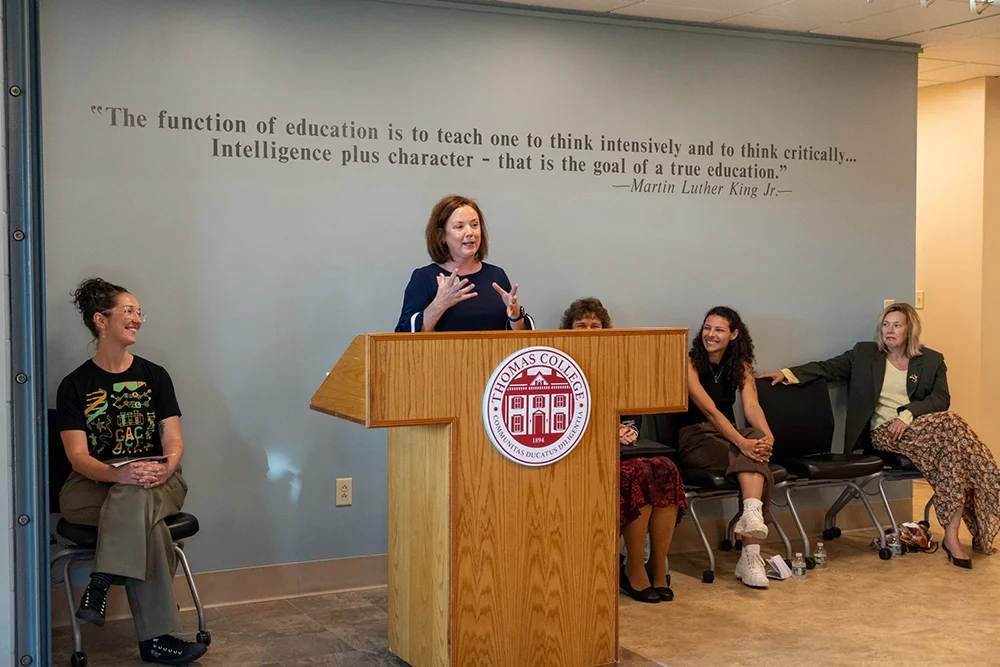
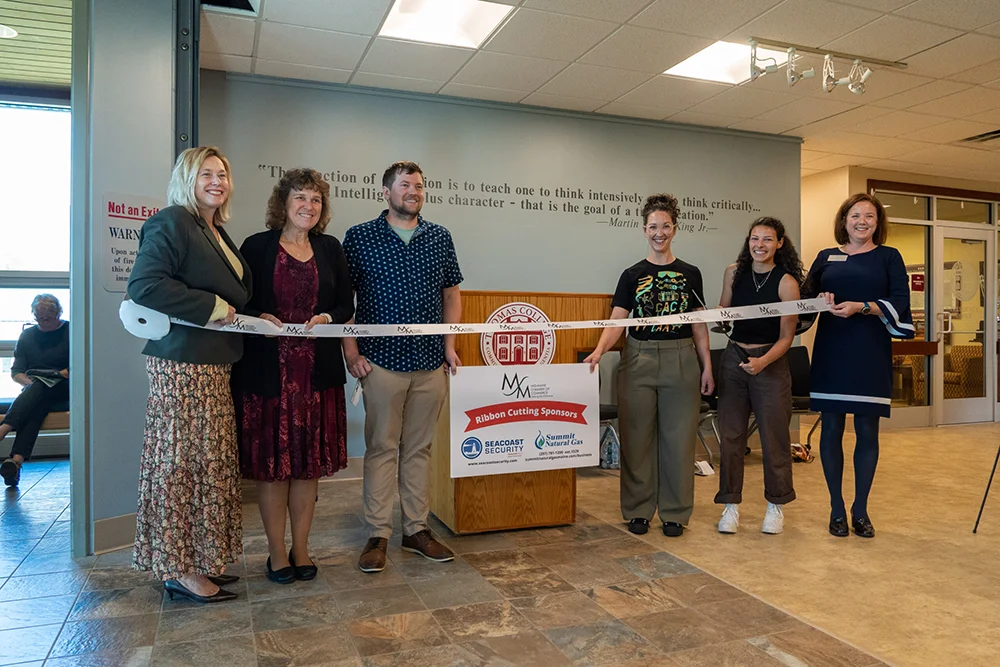
Dr. McCarthy says throughout her career, she has become a better educator and advisor.
“I’m a different teacher than I was in the beginning. I was very serious and probably dry,” she said. “I’ve learned through professional development opportunities and experience that building a relationship by sharing who I am as a person really lends itself to student learning. If students can find you interesting, compassionate and funny, they tend to be more engaged.”
Dr. McCarthy wasn’t always a teacher. She is a forensic scientist by trade and spent the first part of her career working for the Maine Crime Lab, collecting and analyzing data from crime scenes and testifying in court.
Dr. McCarthy found her way to becoming a forensic scientist because of her interest in science.
“I was drawn to science originally because I was good at it and there is always a correct answer,” she said.
For her undergraduate degree, Dr. McCarthy studied statistics and chemistry. After, she realized her degree was too broad and decided to get her master’s in forensic science.
“I thought it would suit me because I get bored very easily and no two cases are the same,” said Dr. McCarthy.
She found she loved it: “It’s such a dynamic job. You get to work with police officers who have a very different purpose. You get to work with lawyers who are very smart but don’t do science. You get to look at 12 members of a jury that can’t ask you any questions and you have to impart communication in one direction that could be for something potentially really serious – like a life sentence.”
Eventually, Dr. McCarthy found herself looking for a new challenge. So, while still working at the Crime Lab, she studied to get another master’s degree.
Once a month she travelled to a sheriff’s office or police department to teach a workshop on skills like fingerprinting or forensic photography. She also began teaching courses at the Maine Police Academy.
Her boss noticed that she was not around as much as before and suggested that maybe teaching was something she wanted to do full-time. So, she decided to reach out to her old professors at her alma mater to see if they wanted to develop a forensic science program. That ended up working out and she worked there for eight years to develop the program.
In 2019, Dr. McCarthy joined Thomas College to be closer to home and has loved the change.
“I really love my colleagues. I love my office. I love that I get to live and work in the same town. I love that I feel supported here. And I love that I’ve developed most of the classes that I teach,” she said.
Dr. McCarthy said that since she started at Thomas College there has been a lot of growth in science including new grants, science lab spaces and equipment, and faculty members.
“The growth of science at Thomas has been very exciting. I’m so proud that I’ve have the privilege to be a part of it and excited to see where the future takes us!”
This story was originally published in the Spring/Summer 2025 Thomas Magazine. Read the full magazine.