
Clinical Mental Health Counseling MS
Section Menu
MS Clinical Mental Health Counseling Degree
New in Fall 2026. Qualifies you to diagnose and treat mental, emotional, and behavioral disorders.
There is high demand for mental health professionals in New England and the United States. With a Master’s of Science in Clinical Mental Health Counseling, you’ll be equipped to enter the field right away and make a real difference in the health and well-being of your community.
See the Master of Science in Clinical Mental Health Counseling Program Term Schedule and Course Sequence
Graduate Admissions
Office: AD-101 Suite
Phone: 207-859-1255
Email: [email protected]
Get a Career As:
- Mental Health Counselor
- Behavioral Health Counselor
- Substance Abuse Counselor
- Community Health Educator
- Marriage & Family Therapist
At a Glance:
- 60 credit hours
- Career-focused curriculum
- 8-week term model
- Leadership development
- Mostly Online
Students will be required to complete two placements:
- Practicum for minimum of eight weeks and 100 hours, with forty hours direct service to actual clients (3 credit hours)
- Internship for 900 hours, with 240 hours direct service with actual clients (6 credit hours)
Counseling Internship I is a variable-credit course (3-9 credits per semester), repeatable, with 18 total credits required for degree completion.
Credit hour structure:
- 3 credits = 150 clock hours
- 6 credits = 300 clock hours
- 9 credits = 450 clock hours
Total required internship hours: 900 clock hours
Students may enroll in up to 6 internship credits per 8-week term (maximum 9 credits per full semester)
(*) Courses marked with an * include required in-person weekend sessions focused on counseling skills, role-play, group facilitation, or clinical simulation.
Weekend residencies may be scheduled during fall, spring, summer, January, or intensive Friday-Sunday formats to align with institutional breaks and student availability.
Online courses are designed primarily for asynchronous delivery with limited synchronous components to support interaction and accessibility.
Practicum and internship placements occur in approved clinical settings with concurrent faculty supervision.
Major Courses:
| Year 1 | Year 2 | ||
|---|---|---|---|
| Professional Orientation, Ethics and Maine Law | Fall 1 | Counseling Children and Adolescents * | Fall 1 |
| Lifespan Development for Counselors | Fall 1 | Counseling Internship I | Fall 1 |
| Counseling Theories and Skills * | Fall II | Counseling Internship I | Fall II |
| Multicultural Counseling and Social Justice | Fall II | ||
| Group Counseling and Group Work * | Spring I | Advanced Treatment Planning and Case Conceptualization | Spring I |
| Assessment and Measurement in Counseling | Spring I | Counseling Internship I | Spring I |
| Research Methods and Program Evaluation | Spring II | Counseling Internship I | Spring II |
| Psychopathology, Diagnosis and Treatment Planning | Spring II | ||
| Treatment Modalities in CMHC * | Summer I | ||
| Crisis Intervention and Acute Care Counseling | Summer I | ||
| Addictive Disorders and Co-Occurring Conditions | Summer II | ||
| Counseling Practicum | Summer II | ||
Professors:

Professor of Political Science & Chair, School of Arts & Sciences

Assistant Professor of Clinical Mental Health Counseling

Dr. Tracey Horton, Professor of Forensic Psychology
“There is a dire shortage of mental health professionals, especially in Maine, and this program seeks to address that need. Many of our graduates want to go on to a master’s degree, so this provides an opportunity to get a degree here at Thomas that allows them to become licensed professional counselors. We’re very excited to be able to offer this program to our students and our community!”
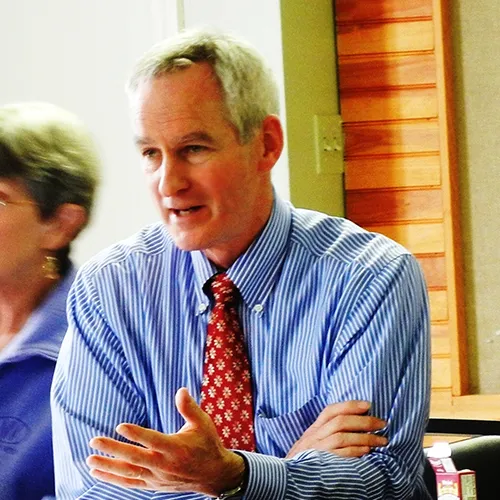
Tom McAdam, CEO of Kennebec Behavioral Health
“At Kennebec Behavioral Health we are very excited to support Thomas College’s new Clinical Mental Health Counseling program. As a provider of mental health care in Maine, we are challenged with the ongoing and increased demand for requests for our services, and we know that Thomas College’s new program will help to train more professional counselors. This in turn will help our workforce shortage especially here in rural Maine. The need for this program is huge, and we believe the timing is optimal to improve access to care.”