
Artificial Intelligence at Thomas College
Library Services department supports the academic and personal enrichment of students, faculty, and staff with leading-edge service, information resources, facilities, and systems, including the use and impacts of artificial intelligence (AI).
Artificial Intelligence (AI) Defined
There is no single universally accepted definition for AI. In some sense it may be more accurate to think of it as a category. For practical purposes this definition generated by ChatGPT may be useful as a basic explanation:
“Artificial Intelligence (AI) refers to the simulation of human intelligence in machines that are programmed to perform tasks that typically require human intelligence. It involves the development of computer systems or algorithms that can process information, learn from experience, adapt to new inputs, and perform tasks with varying degrees of autonomy.”
OpenAI. (2023). ChatGPT (July 10 version) [Large language model].
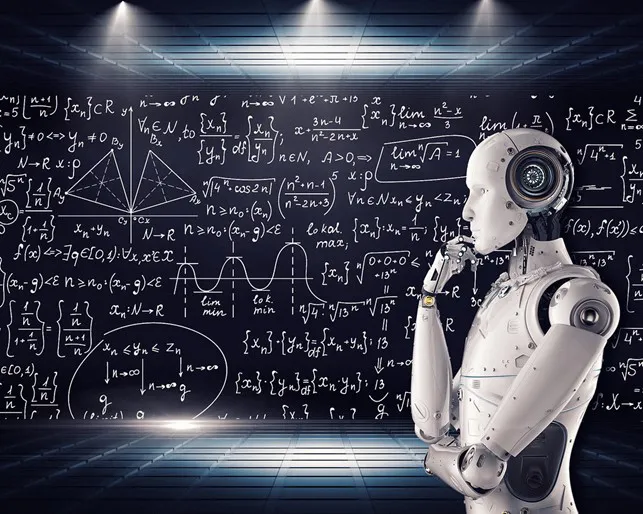
“By far, the greatest danger of Artificial Intelligence is that people conclude too early that they understand it.” —Eliezer Yudkowsky
Guiding Statement
The College’s position on Artificial Intelligence (AI) is that, as with all new technologies, we seek ways to use and adapt AI in our classrooms most effectively to prepare students to employ technology appropriately, with awareness of its benefits and limitations, in their professional careers.
With the introduction of generative-AI that has unlimited capability to generate novel content based on continuously aggregated data, our information space has the potential to significantly change very quickly. Given that higher education has knowledge as a fundamental focus in preparing learners, it is imperative that we integrate strategies to address this new technology throughout our curriculum. With that in mind, we commit to engaging our community to prepare our students for a future that will infuse these technologies at an ever-increasing rate.
Potential Uses
Among the exciting aspects of AI are the wide-ranging potential applications:
Instructional – Large Language Models (LLM) have been the initial focus to change how the written word is produced. But beyond writing, generative AI is already producing images, multimedia presentations, and video.
Professional – A variety of AI tools (algorithmic and generative) are already being used to streamline processes and create more effective work-flows. Generating a summary, for instance, may now only take a few minutes or even seconds (prompts matter).
OER and DEI – AI is an excellent addition to the growing number of tools that can be used to make educational materials both more affordable and accessible. Unfortunately, educational materials often underrepresent or fail to consider aspects related to Diversity, Equity, and Inclusion. AI can help modify or create resources that address varied backgrounds including but not limited to ethnicity, gender, language, neurodivergence, or even physical limitations. Using AI in conjunction with OER (material without any copyright restrictions) will enable adapting material more easily and efficiently.
For more specific resources and guidance go to the appropriate section below:
Email: [email protected]
Phone: 207-859-1204
Video/Teams: [email protected]

AI Info
Library Info
Student Services
Phone Numbers
- Admissions (Undergrad): 207-859-1101
- Admissions (Grad): 207-859-1255
- Advancement: 207-859-1118
- Counseling: 207-859-1245
- Financial Aid: 207-859-1110
- Health Services: 207-859-1401
- Health Svcs. Fax: 207-859-1126
- Main Fax Number: 207-859-1114
- Registrar: 207-859-1202
- Safety & Security: 207-859-1399